Our School has recently made new progress in intelligent video understanding, with research findings published in IEEE Transactions on Image Processing (TIP). TIP is an influential international journal in image and video processing. It is listed as a Category A journal in computer graphics and multimedia by the China Computer Federation (CCF). In the Chinese Academy of Sciences (CAS) Journal Ranking, TIP is classified in Zone 1 in the broad category of Computer Science and designated as a TOP journal. Its latest reported impact factor is 15.3 (2025). This publication reflects our School’s sustained research efforts in image and multimedia processing, intelligent video understanding, and temporal action localization.
Paper Title: LSGNet: A Local-Pattern Separation and Global-Aware Network for Temporal Action Detection
As video content continues to grow, accurately identifying action categories and locating their start and end times in long, untrimmed videos has become an important challenge in intelligent video analysis. Background interference, subtle differences between actions and background content, and variations in action duration make accurate recognition and localization difficult. Existing methods often struggle to capture both short-term action variations and long-range semantic relationships, potentially overlooking critical boundary information.
As illustrated in Figure 1, this research addresses these challenges by jointly modeling local action patterns and global contextual information. This approach improves action category recognition and temporal boundary localization, offering a new technical approach to intelligent video analysis in complex scenarios.
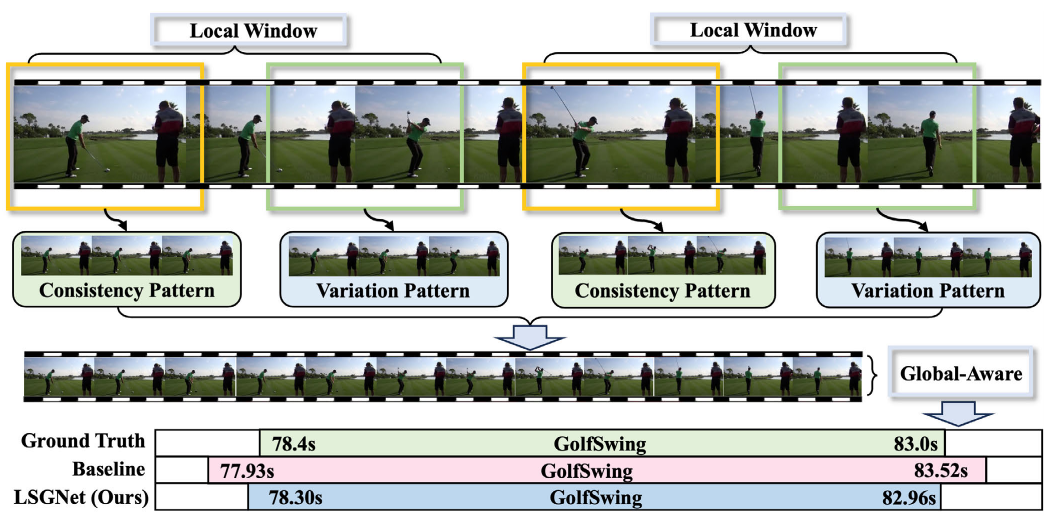
Figure 1. Motivation for LSGNet and illustration of temporal action boundary localization
The paper proposes the Local-Pattern Separation and Global-Aware Network (LSGNet), with its overall architecture shown in Figure 2. The network jointly models local semantic consistency, dynamic variations, and global contextual information. Through multiscale feature refinement, it preserves critical temporal details to improve action category recognition and temporal boundary localization. Experiments on multiple public datasets demonstrate the effectiveness of the proposed method, which achieves competitive performance in temporal action detection. Furthermore, the local-pattern separation module improves performance in video segment retrieval and video highlight detection, demonstrating its potential for application across different tasks. This work offers a new method for precise action localization in complex videos and provides a research reference for applications such as video retrieval and video summarization.
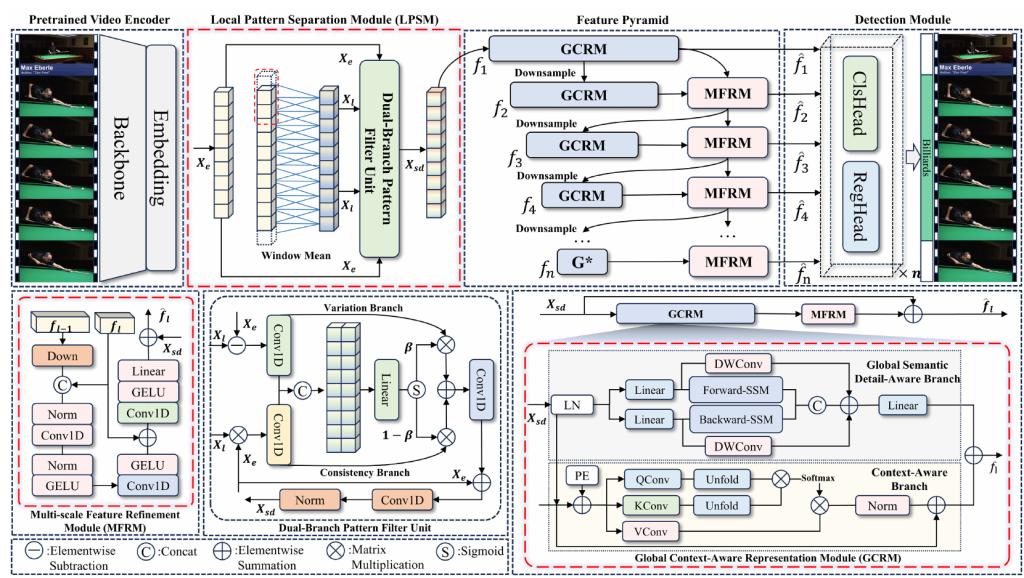
Figure 2. Overview of the Local-Pattern Separation and Global-Aware Network
The paper was jointly authored by faculty members and students, including Weilin Yang, Yibo Zhao, Chunjie Ma, Chen Li, and Zan Gao. The research was supported by the Key Program and General Program of the National Natural Science Foundation of China, the Key Program of the Tianjin Natural Science Foundation, the Shandong Provincial Natural Science Foundation, and other funding programs. By jointly modeling local semantic consistency, dynamic variations, and global context, while preserving critical temporal details through multiscale feature refinement, this work effectively improves action category recognition and temporal boundary localization.
In recent years, our School has continued to advance research in computer vision and intelligent video understanding, promoting the integration of artificial intelligence algorithms with video analysis technologies. Moving forward, our School will strengthen academic exchanges and research collaboration with universities and research institutions in China and abroad. We will pursue high-quality research on action recognition, temporal localization, and video content understanding in complex scenarios, further strengthening our School’s academic influence and research capabilities in intelligent media analysis.




