Our School has recently made new progress in multimedia content security, with research findings published in IEEE Transactions on Dependable and Secure Computing (TDSC). TDSC is an influential international journal in dependable and secure computing. It is listed as a Category A journal in cybersecurity by the China Computer Federation (CCF), with a latest reported impact factor of 6.8 (2025). This publication reflects our School’s sustained research efforts in multimedia content security and deepfake detection.
Paper Title: Learning Generalizable Representations for Deepfake Detection With Realistic Sample Generation and Dual Augmentation
Advances in generative artificial intelligence have made facial forgeries increasingly realistic, presenting new challenges for multimedia authenticity verification. Existing detection methods often rely on manipulation artifacts specific to their training data, leading to performance degradation when encountering new data distributions or previously unseen forgery methods. Learning features that generalize across different manipulation techniques has therefore become essential to improving the practical applicability of deepfake detection.
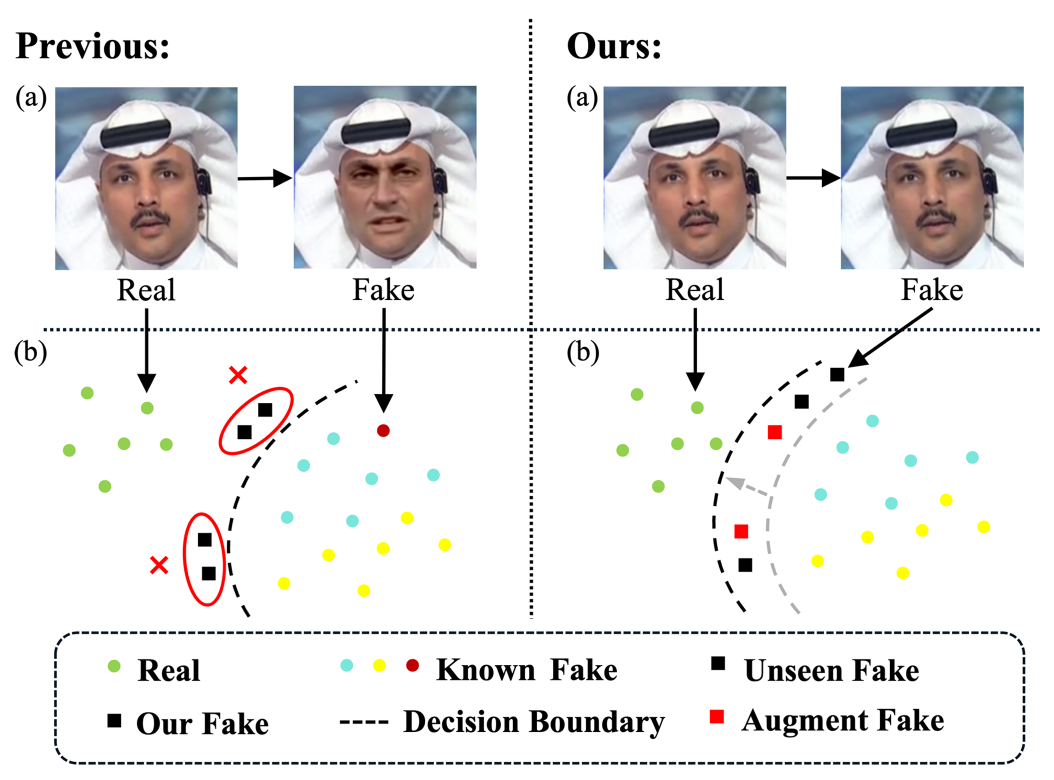
Figure 1. Comparison of the underlying approaches of conventional detection methods and RSG-DA
Building on this idea, the paper proposes the Realistic Sample Generation and Dual Augmentation framework (RSG-DA), as illustrated in Figure 2. By generating diverse, highly realistic forged samples and applying feature-level augmentation, the framework improves the model’s ability to identify previously unseen forgery methods. Knowledge distillation further transfers knowledge from multiple teacher models to a student detector, balancing detection performance with inference efficiency. Experiments were conducted on multiple public datasets. The framework achieved an average frame-level AUC of 79.23% in cross-dataset evaluations and outperformed competing methods in several tests. These results demonstrate its generalization capability and adaptability to different generation methods and variations in image quality.
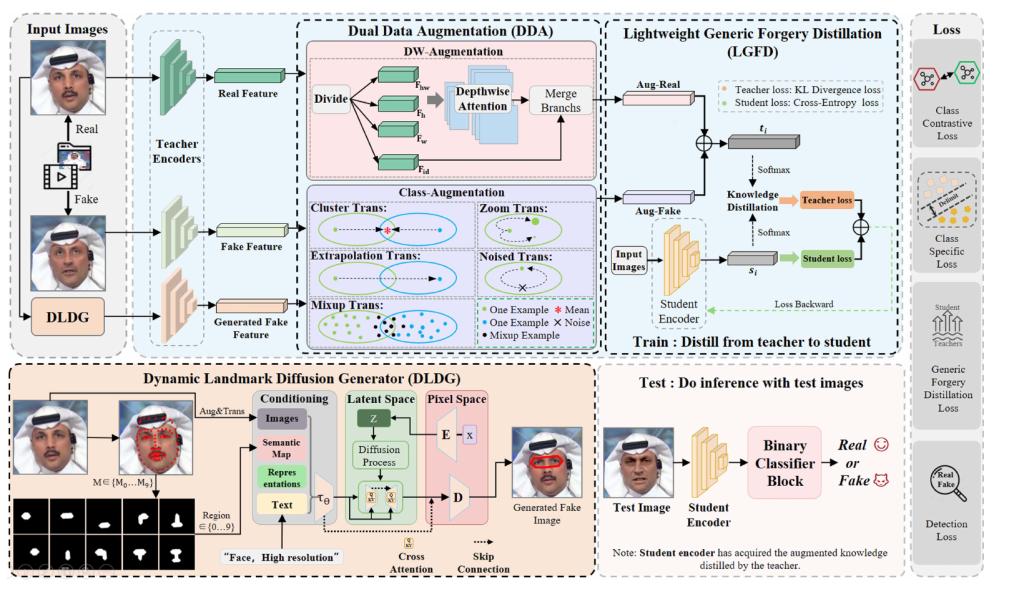
Figure 2. Overview of the RSG-DA framework for realistic sample generation and dual augmentation
The paper was jointly authored by faculty members and students, including Xinhai Zhu, Hao Jia, Yibo Zhao, Chunjie Ma, Chen Li, and Zan Gao. The research was supported by the Key Program and General Program of the National Natural Science Foundation of China, the Key Program of the Tianjin Natural Science Foundation, the Shandong Provincial Natural Science Foundation, and other funding programs. By improving generalization at both the training-sample and feature-representation levels, this work provides a methodological reference for detecting previously unseen facial forgeries.
In recent years, our School has continued to address multimedia content security challenges arising from advances in generative artificial intelligence, promoting the integration of intelligent detection algorithms with media authenticity verification technologies. Moving forward, our School will deepen academic exchanges and research collaboration with universities and research institutions in China and abroad. We will pursue high-quality research on deepfake detection, AI-generated content identification, and model generalization, further strengthening our School’s academic influence and research capabilities in digital media content security.




